Medical Investigation
A board-certified surgeon's anonymous survey reveals the stark gap between success rates surgeons quote and what patients actually experience
Michael Reynolds
Health & Medical Correspondent
February 2026
If you or someone you love is considering knee surgery, there's a number you need to see before you book that consultation.
It's not 94%. That's the number surgeons quote. The "success rate" printed on hospital brochures and repeated in pre-op appointments across the country.
The real number is 29%. That's the percentage of knee replacement patients who are genuinely satisfied with their outcome — according to an anonymous survey of 312 patients conducted by one of the busiest knee replacement surgeons on the West Coast. The difference between those two numbers may be the most important thing you read this year.
Only 29% of knee replacement patients report genuine satisfaction with their outcome — while 24% actively regret having the surgery
Here's what most patients are never told: The 94% figure measures implant survival. It means the hardware — the metal and plastic bolted into your body — didn't fall apart within two years. That's the bar.
It doesn't measure whether you're happy. Whether you can do the things you love. Whether you'd make the same decision again knowing what you know now.
When the surgeon behind this survey dug into actual quality of life — the stuff that matters when you're trying to climb stairs, play with your grandchildren, or simply walk through a parking lot without wincing — the picture looked nothing like 94%. Only 29% reported being very satisfied. Another 31% said it met basic expectations but with significant limitations they weren't warned about. And a devastating 24% actively regretted having the surgery altogether. Hospital satisfaction surveys are collected just six weeks after surgery — before patients have lived with the long-term reality.
“Your joint cartilage is 80% water. That water is the cushion. When patients come in with joint discomfort, we assume the cartilage has 'worn away.' But in many cases, it's dehydrated. This distinction changes everything.”
Dr. James Mitchell
Board-Certified Orthopedic Surgeon
When a second surgeon heard these numbers, he didn't just question the surgery stats. He questioned the entire diagnosis. Healthy cartilage holds 75-85% water content. Arthritic cartilage drops to 60-65%. The difference between comfortable joints and daily agony comes down to water retention at the cellular level.
But why would cartilage dry out? The answer is hiding in the soil. Since 1950, modern agriculture has stripped the earth of the very minerals cartilage needs to hold water: 52% less magnesium. 41% less calcium. 27% less potassium. A staggering 63% less silica.
These aren't random nutrients. They're the specific minerals that regulate water flow into cartilage cells, build the collagen matrix that gives cartilage its structure, and enhance the body's ability to absorb and use other minerals. Without them, cartilage slowly dehydrates. It compresses. Hardens. Gets thinner. On an X-ray, it looks like the cartilage is disappearing. But if the cartilage is dehydrated — not destroyed — there may be another option entirely.
"One patient saw his joint space increase from 1.8mm to 2.6mm in just 14 weeks. His X-rays didn't just stabilize. They improved."
One orthopedic surgeon decided to test this theory directly. He began offering select surgical candidates a simple alternative: before committing to an irreversible procedure, try 14 weeks of targeted mineral repletion. Concentrated ocean minerals — specifically sea moss — delivering the five compounds cartilage needs to hold water again.
Over four years, 94 surgical candidates accepted the protocol. 72% avoided or significantly delayed surgery entirely. They kept their natural knees. Returned to activities they'd given up. Went back to work, back to playing with grandchildren, back to living without planning every step around their discomfort.
The 28% who didn't respond? They simply proceeded with the surgery they were already scheduled for. No time lost. No harm done. But nearly three out of four never needed that operating room. One 47-year-old construction foreman with bilateral knee arthritis saw his joint space increase from 1.8mm to 2.6mm in just 14 weeks. His daily discomfort score dropped from 8 out of 10 to 2 out of 10. Nineteen months later, he's working full construction days.
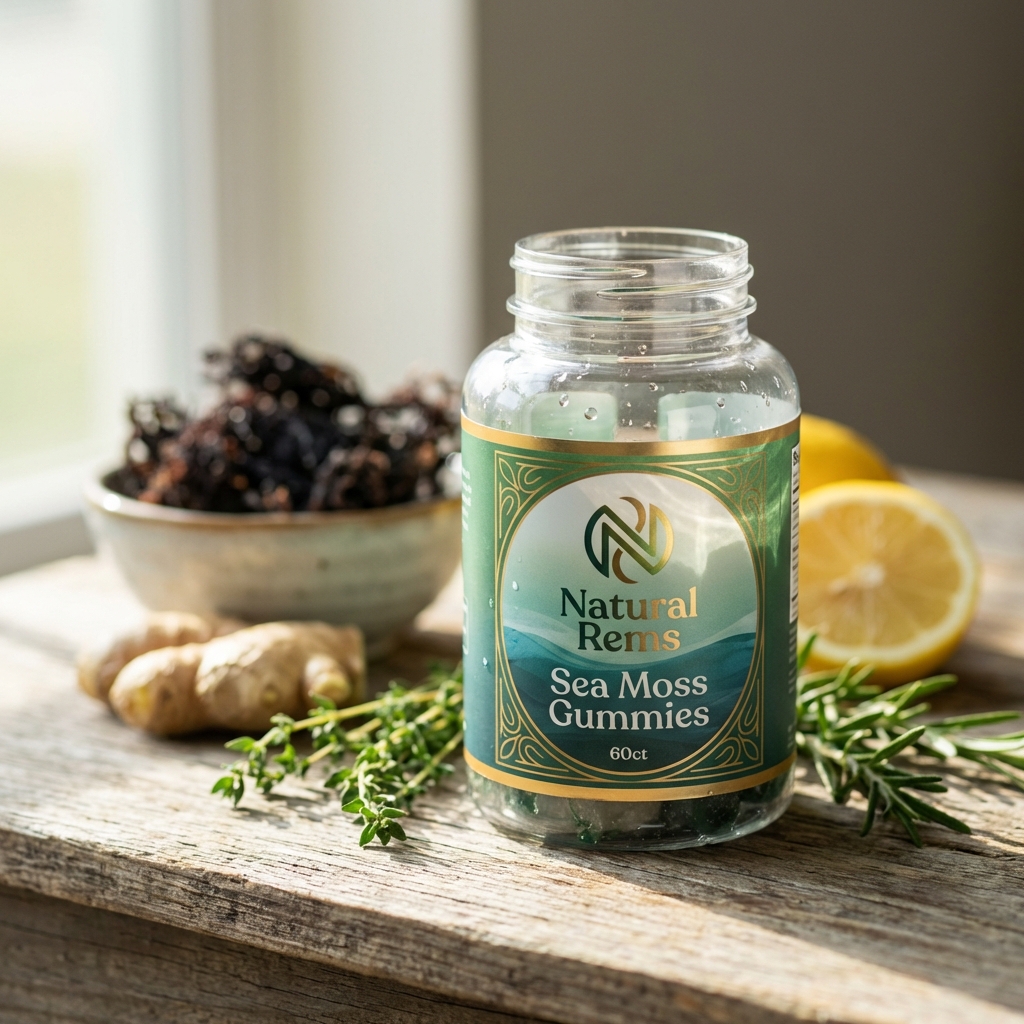
The specific formulation gaining traction among patients exploring this approach is Natural Rems Sea Moss Gummies — a 16-in-1 formula that combines all five cartilage-hydrating ocean minerals with 11 supporting compounds.
The core: ocean-derived sea moss delivering iodine, potassium, silica, magnesium, and calcium in bioavailable form. The support system includes ashwagandha to lower stress that accelerates mineral depletion, turmeric and ginger to calm inflammation blocking nutrient flow, and black pepper — the absorption multiplier that boosts bioavailability by up to 2,000%.
One gummy. Once a day. That's the entire protocol. And here's what makes the decision obvious: Surgery will always be an option. Operating rooms aren't disappearing. But your natural cartilage? Every month it continues to dehydrate without the minerals it needs, the window for rehydration narrows.

“I was scheduled for knee replacement in 8 weeks. My surgeon said to try this first. Three months later, I cancelled the surgery. I'm back to working in my shop, playing with my grandkids, living my life. Best decision I ever made.”
— Robert K.
Verified Buyer
LIMITED SUPPLY ENDS IN
Common Questions
Natural Rems combines all 5 cartilage-hydrating ocean minerals (iodine, potassium, silica, magnesium, calcium) with 11 supporting compounds in clinical doses. Most joint supplements contain only 1-3 ingredients at insufficient levels. The black pepper extract alone increases absorption by up to 2,000%, meaning your body actually uses what you're taking.
The clinical protocol that kept 72% of patients out of surgery followed a 14-week timeline. Most users report noticeable improvements in joint comfort and mobility within 4-6 weeks. The 90-day guarantee covers the full clinical timeline, so you can evaluate results risk-free.
Absolutely. That's exactly how the original protocol was designed—as a reversible option to try before an irreversible procedure. If it works, you may avoid or delay surgery. If it doesn't, surgery remains available unchanged. Natural Rems is made from ocean minerals and plant compounds with no contraindications for pre-surgical use, but always inform your surgeon of any supplements you're taking.
Most orthopedic surgeons are trained to diagnose structural problems and correct them surgically. Mineral biochemistry and cartilage rehydration aren't part of surgical residency. Additionally, recommending ocean minerals generates zero revenue for hospitals or surgical practices, while knee replacement generates $18,000-$28,000 in surgical fees alone. The system isn't designed to explore whether cartilage could be rehydrated before it's removed.
If you're not completely satisfied for any reason within 90 days, simply contact Natural Rems for a full refund—no questions asked. You can try the full clinical protocol timeline completely risk-free. The guarantee removes all financial risk from trying the reversible option before committing to irreversible surgery.